
From environmental data to environmental action – the Environmental Intelligence Cloud 2026
The air in our cities is invisible – yet it affects the health and well-being of their inhabitants every day. In recent years, cities and municipalities around the world have therefore invested heavily in sensors, measuring stations, and digital infrastructure to collect air quality and other relevant environmental data. But there is often a significant gap between collecting this data and its actual application. It’s time to take the next step: from data to action.
The data is there – now what?
Whether it’s particulate matter, nitrogen oxides, or ozone levels – modern cities now possess an impressive wealth of information. This data is collected in real time, visualized, and sometimes even made publicly accessible. But often, that’s all it remains: visualization.
A dashboard alone does not improve air quality. The crucial question, therefore, is: How can this data be concretely incorporated into political decisions, urban planning, and the behavior of citizens?
Air quality data offers enormous potential for evidence-based policy. Traffic management, speed limits, or low-emission zones can be dynamically adjusted when current pollution levels require it. Instead of rigid regulations, cities could implement flexible measures that are based on real-world conditions. This data also plays a central role in urban planning: Where are pollution levels particularly high? Which neighborhoods are more affected than others? Such insights can inform the design of green spaces, the placement of schools, or the development of new residential areas.
Data as the foundation for smart(er) decisions
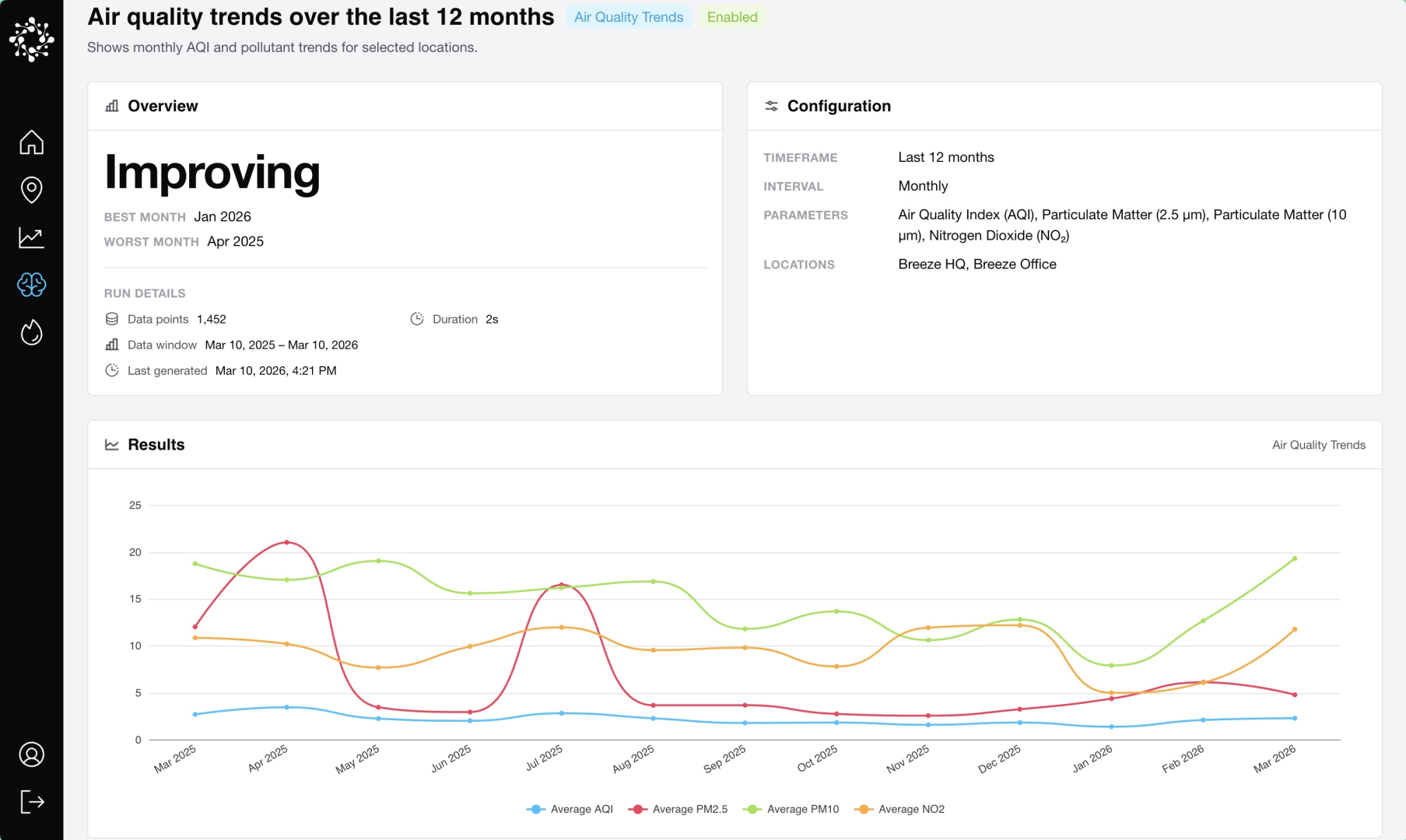
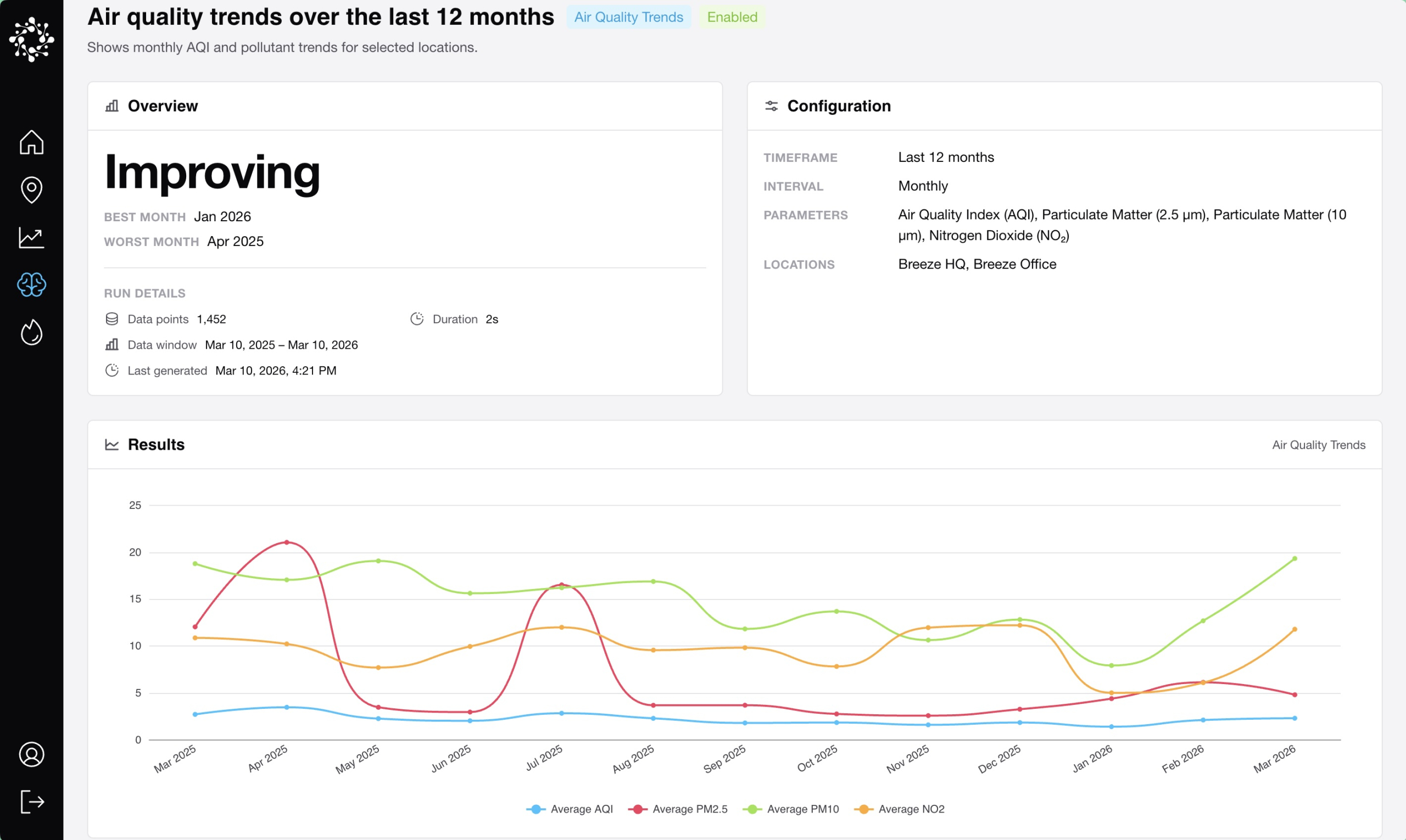
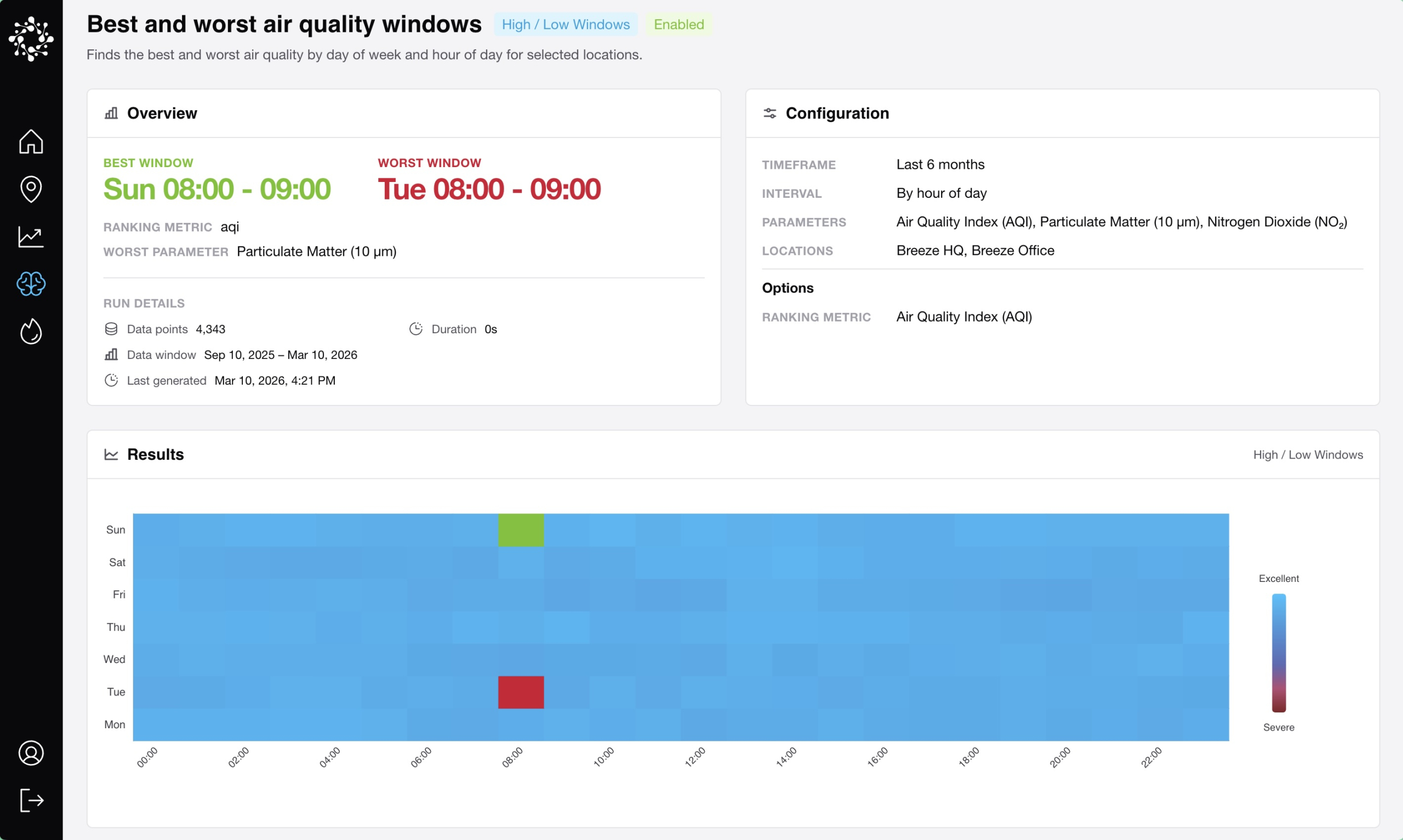
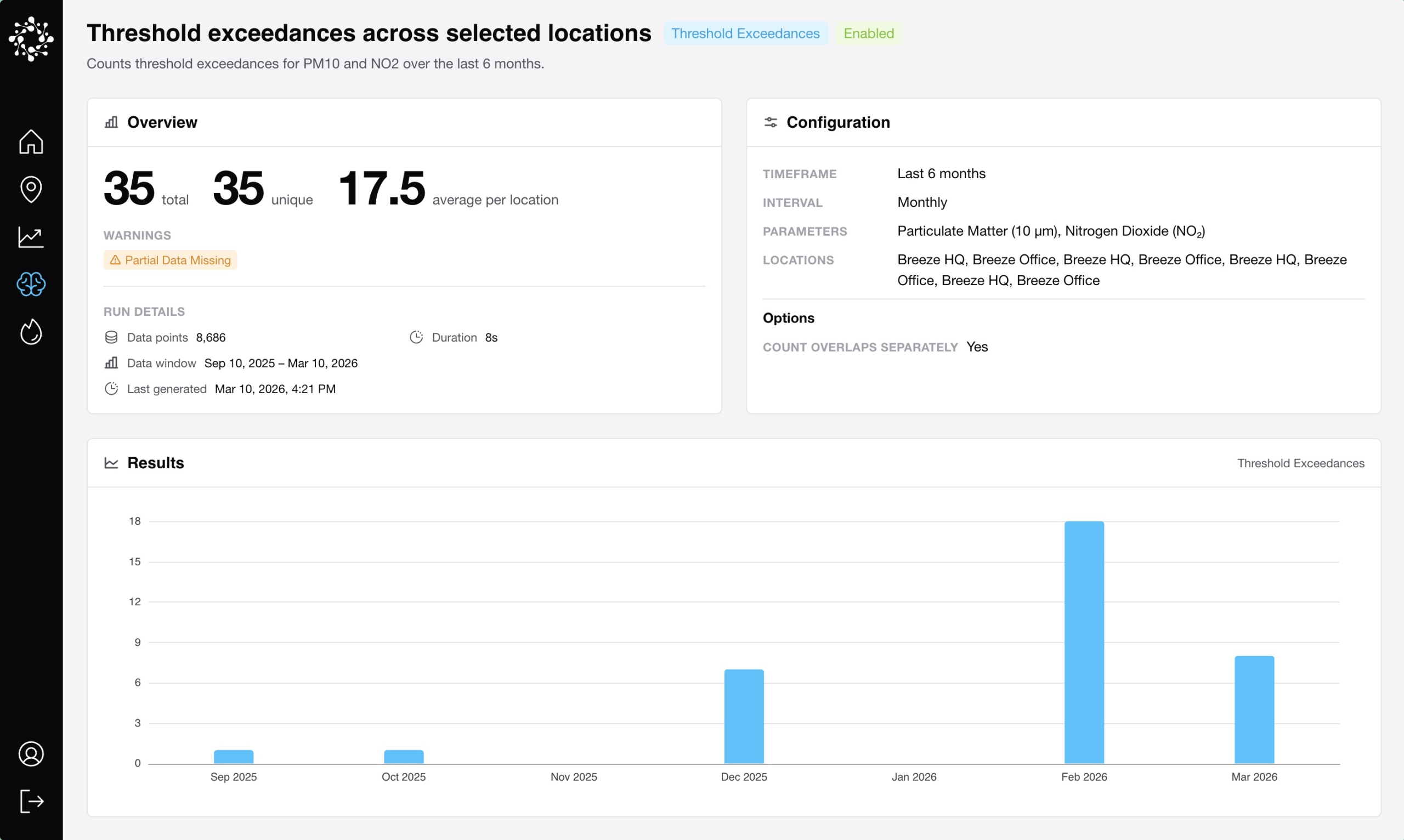
To make such decisions possible, we need not only data, but also intelligent software for analyzing it. That is precisely why we completely redesigned our Environmental Intelligence Cloud (EIC) last year – with a clear focus on not just visualization, but on the intelligent analysis of environmental data.
As an expert system for air quality and other environmental data, the EIC provides plug-and-play data analysis tools tailored to the questions described above. This allows you to answer relevant questions with the click of a single button, helping you derive decision-making templates from the collected data. Creating analyses based on your individual needs is also possible – please feel free to contact us.
Benefit from the environmental protection experiences of thousands of cities thanks to AI
Thanks to EnvironmentalAI, natively integrated into the EIC, you can access the knowledge and experience gained from clean air plans of cities worldwide. If our system detects a problem with one or more air pollutants, EnvironmentalAI checks which similar locations in other cities have already proven particularly successful with specific clean air measures. This analysis includes information on building structures, traffic conditions, and local industry, among others. You then receive tailored recommendations on which clean air actions are likely to be most effective at your specific locations – in many cases, even with a concrete prediction of the percentage improvement in air quality that would result from implementation.
Next step: action instead of just measurement
The technology is available, the knowledge is growing – now it’s a matter of having the courage to implement it. Cities can no longer view air quality data merely as a source of information, but must actively use it as a management tool.
Because ultimately, it’s not about data points on a screen, but about the air we breathe every day. The path is clear: from data to action.
 unsplash.com / Scott Graham
 Markus Spiske / unsplash.com